Blog

  • The True Cost of a Bad Hire (Why the 30% Rule Is a Dangerous Underestimate)

    The True Cost of a Bad Hire (Why the 30% Rule Is a Dangerous Underestimate)

    [tldr title=”Key takeaways”]

    • The commonly cited “30% of salary” figure dramatically underestimates real bad hire costs; actual damage typically reaches 3-4x annual salary.
    • For an $80,000 employee, total cost exposure ranges from $240,000-$320,000 when accounting for all downstream effects
    • 89% of hiring failures stem from behavioral and attitudinal issues, not technical skill gaps, yet traditional screening focuses on the wrong 11%
    • 46% of new hires fail within 18 months, with 82% of managers admitting they saw warning signs during interviews but hired anyway
    • Hidden costs, team disruption, customer impact, top performer attrition, compound exponentially beyond direct replacement expenses

    [/tldr]

    What Is the Cost of a Bad Hire? (And Why Most Estimates Are Wrong)

    The cost of a bad hire is the total financial and operational damage caused by hiring an employee who fails to meet performance, behavioral, or cultural expectations, eventually requiring replacement.This damage cascades through direct expenses, lost productivity, team disruption, and opportunity cost. Understanding the true scope requires looking beyond surface-level replacement costs.

    • Not just replacement:Direct recruiting and severance represent only 15-20% of total damage
    • Compounding effects:Team productivity drops, morale declines, and high performers leave
    • Opportunity cost:Revenue-generating projects stall while management addresses underperformance

    Most articles cite the same number: The U.S. Department of Labor estimates the cost of a bad hire at 30% of first-year earnings (U.S. Department of Labor).

    That figure is technically correct, and strategically useless.

    It only accounts for direct replacement costs. It ignores lost productivity, team disruption, customer impact, leadership time, and opportunity cost. In practice, that 30% figure represents the floor, not the ceiling.

    When you account for downstream effects, multiple independent studies converge on a more sobering reality: The true cost of a bad hire often ranges from 3 to 4 times the employee’s annual salary (SHRM Human Capital Benchmarking Report, Harvard Business Review).

    For a mid-level professional earning $80,000, that puts the real exposure between $240,000 and $320,000.

    This is not a theoretical loss. It is what quietly happens when a hire looks acceptable on paper but fails in execution.

    Here’s the thing.

    To understand why, you need to see the entire cost cascade, not just the visible expenses.

    The 5-Stage Cost Cascade of a Bad Hire

    Most hiring cost calculators stop at recruiting fees. In reality, the damage unfolds in five compounding stages. Each stage amplifies the previous one, creating exponential rather than linear impact.

    Stage 1: Recruitment Expenses (The Obvious Costs)

    The average cost per hire in the U.S. is $4,700, covering advertising, sourcing tools, recruiter time, and interview coordination (SHRM Cost-Per-Hire Report).

    For senior or specialized roles, this number often exceeds $10,000–$15,000, especially when agencies or retained search firms are involved.

    These costs are incurred before the employee does a single hour of productive work. You’re paying for the privilege of making a mistake.

    Stage 2: Compensation & Benefits (Wasted Capital)

    Salary is not just payroll; it is capital allocation.

    When a hire underperforms, the organization continues paying salary, benefits, payroll taxes, equipment, and software access. Even a conservative six-month mis-hire at an $80,000 salary represents $40,000+ in sunk compensation, excluding benefits or severance.

    That’s $40,000 you spent on someone actively reducing your team’s output.

    Stage 3: Training & Management Time (The Invisible Drain)

    Bad hires do not fail quietly. They consume disproportionate management attention.

    Research shows that managers spend up to 26% of their time coaching or correcting underperforming employees (Harvard Business Review, 2016).

    That time is diverted from high-performer development, strategic planning, and revenue-generating initiatives. For a manager earning $120,000 annually, 26% of their time represents $31,200 in lost strategic capacity, per underperformer they’re managing.

    This is where the opportunity cost begins to eclipse direct expense.

    Stage 4: Team Disruption & Productivity Loss

    Poor performers don’t just underperform; they slow others down.

    Gallup research shows that disengaged employees reduce team productivity by up to 36% (Gallup State of the American Workplace).

    When teammates compensate for mistakes, rework tasks, or absorb emotional friction, output drops across the group. Morale declines. Burnout increases. Your best people start updating their LinkedIn profiles.

    In a five-person team with an average salary of $80,000, a 36% productivity drop represents $144,000 in annualized lost capacity. That’s the output cost of one bad hire poisoning the entire unit.

    Stage 5: Replacement & Restart Costs

    Eventually, the organization accepts reality and replaces the hire.

    This means repeating recruitment costs, restarting onboarding, and rebuilding trust within the team. You effectively pay the cost of hiring twice, while absorbing all prior losses.But it gets worse.

    The Total Impact

    Conservative industry data shows 74% of employers report wasting an average of $14,900 per bad hire, and that’s the low-end estimate (CareerBuilder Survey, 2017).

    Comprehensive analyses that factor in productivity loss, team disruption, and opportunity cost place total damage at 3–4x annual salary (SHRM).

    For that $80,000 employee, you’re looking at $240,000-$320,000 in total organizational damage. That’s not a cost, that’s a strategic wound.

    The Hidden Costs That Never Appear on a Balance Sheet

    Direct costs are painful, but hidden costs are where the real damage compounds. These don’t show up in quarterly reports until it’s too late.

    The Morale Tax

    One bad hire increases workload and frustration for high performers.

    Studies show 80% of employee turnover is linked to poor hiring or management decisions (Gallup Employee Retention Research).

    Top performers leave not because they dislike the job, but because they refuse to carry dead weight. You lose your best people trying to compensate for your worst hire. The cost of replacing a high performer often exceeds $100,000 when you factor in knowledge loss and ramp-up time for their replacement.

    Customer & Reputation Impact

    Bad hires affect customers long before they affect HR metrics.

    Research indicates 32% of customers stop doing business after just one bad experience (PwC Future of Customer Experience).

    In customer-facing roles, one mis-hire can permanently damage brand trust. A sales rep who overpromises, a support agent who alienates users, an account manager who misses deadlines; each interaction creates reputation debt that outlasts the employee’s tenure.

    For a B2B company with an average customer lifetime value of $50,000, losing six customers due to one bad hire represents $300,000 in lost revenue, separate from all other bad hire costs.

    The Productivity Void

    Disengagement is one of the largest hidden economic drains.

    Gallup estimates $450–$550 billion lost annually in U.S. productivity due to disengaged employees (Gallup State of the American Workplace).

    A single bad hire can create a vacuum that stalls projects, delays launches, and misses market windows, especially in fast-moving teams. The product feature that ships three months late because the lead developer was incompetent. The client’s pitch failed because the account exec couldn’t execute. The partnership collapsed because the BD hire lacked follow-through.

    These aren’t line items. They’re strategic failures disguised as personnel problems.

    Why Do Nearly Half of New Hires Fail?

    According to leadership research, 46% of new hires fail within 18 months (Leadership IQ Study).

    Think about that. Coin-flip odds. You’re as likely to hire someone who fails as someone who succeeds.

    Critically, technical skills are rarely the cause.

    The 89% Reality

    Leadership IQ found that 89% of hiring failures stem from attitudinal issues, not skill gaps.

    Breakdown:

    • Coachability issues: 26%
    • Emotional intelligence gaps (23%)
    • Motivation or temperament mismatches (17%)
    • Technical incompetence (11%)

    Technical incompetence, the thing resumes are designed to screen for, accounted for just 11% of failures.

    The other 89%? Behavioral signals that traditional hiring ignores entirely.

    The Interview Blind Spot

    Even more revealing: 82% of hiring managers admitted they noticed warning signs during interviews, but hired anyway (Leadership IQ).

    They saw the red flags. The evasive answers. The inability to articulate problem-solving approaches. The lack of curiosity about the role. The mismatch between stated values and demonstrated behavior.

    And they hired anyway, because the resume looked good.

    Traditional hiring overweights resumes and credentials (the visible 11%) and under-measures intent, behavior, and adaptability (the critical 89%). This is why bad hires are often predictable in hindsight. Everyone saw it coming. No one acted on the signal.

    How Intent-Based Hiring Intelligence Prevents the $240,000 Mistake

    Traditional hiring optimizes for the wrong 11%. Resumes show credentials. Interviews test presentation skills. Neither predicts the behavioral and attitudinal factors that cause 89% of failures.

    The teams that have reduced bad-hire rates don’t screen faster; they screen smarter. They evaluate intent, problem-solving approach, and behavioral consistency before making offers. This requires a different infrastructure: one that surfaces decision-ready signals instead of raw candidate data.

    The Intelligence Layer Missing from Traditional Hiring

    Most organizations cobble together disconnected tools:

    • LinkedIn for sourcing
    • Spreadsheets for tracking
    • Phone screens for initial vetting
    • Multiple interview rounds for final evaluation

    Each handoff introduces friction. Each transition loses signal. By the time a hiring decision is made, you’re relying on gut feel and interview performance, the same process that produces 46% failure rates.

    ConnectDevs approaches this differently. Instead of fragmenting the hiring workflow, it connects role understanding, candidate discovery, behavioral evaluation, and decision support into one coherent intelligence system.

    The Three-Agent System That Reduces Bad Hires

    ConnectDevs uses a multi-agent architecture designed to surface the 89%, the behavioral and intent signals that traditional hiring misses

    The Scout: Intent-Based Sourcing That Finds What Resumes Hide

    The Scout interprets role requirements semantically rather than matching keywords. Instead of filtering for “Python” and missing capable Go developers, it understands the underlying need for a backend engineer who can handle distributed systems.

    This matters because 60% of qualified candidates don’t use the keywords recruiters search for. The Scout surfaces people traditional Boolean search excludes, expanding your talent pool beyond the obvious matches.

    But sourcing alone doesn’t prevent bad hires. You still need to evaluate fit.

    SAM: Structured AI Interviews That Reveal the 89%

    SAM (the Expert Interview Agent) runs domain-aware interviews that assess coachability, communication clarity, problem-solving approach, and emotional intelligence, the factors that actually predict success.

    Rather than replacing human judgment, SAM standardizes the pre-screening layer. It asks consistent questions. It evaluates responses against structured rubrics. It generates competency scorecards that show strengths, risks, and recommended next steps.

    This is where ConnectDevs addresses the core bad-hire problem: behavioral evaluation at scale. SAM surfaces the intent mismatches and attitudinal red flags that 82% of hiring managers see but ignore. When someone struggles to articulate their problem-solving process or shows poor communication patterns during an AI interview, that’s a predictive signal, before you’ve invested hours in multi-round interviews.

    For organizations building AI hiring engines or implementing AI interviewers, the goal isn’t automation; it’s consistent evaluation. SAM ensures every candidate is assessed against the same criteria, reducing the variance that leads to mis-hires.

    The Pilot: Campaign Management That Keeps Velocity Without Sacrificing Signal

    The Pilot manages outreach, tracks candidate progression, and maintains funnel visibility. It ensures that high-signal candidates don’t fall through the cracks while low-fit candidates are filtered out early.

    Speed matters, but only when it’s paired with quality. The Pilot accelerates the right parts of hiring (outreach, scheduling, progression tracking) without compromising evaluation rigor.

    From Resume Screening to Behavioral Intelligence

    Traditional hiring asks: “Does this resume match our requirements?”

    ConnectDevs asks: “Does this person’s behavior, intent, and problem-solving approach predict success in this role?”

    That shift, from credential screening to behavioral intelligence, is what reduces the 46% failure rate. When you evaluate the 89% that actually matters, you stop hiring people who look good on paper but fail in execution.

    Organizations implementing core values in AI hiring or building AI-powered hiring processes face the same fundamental question: Are you optimizing for resume match or behavioral fit?

    The teams that have reduced bad hires below 20% made a deliberate choice: They screen for intent and adaptability first, credentials second. They use structured evaluation to surface red flags early. They don’t ignore warning signs because a candidate’s LinkedIn profile looks impressive.

    The Cost of Ignoring Behavioral Signals

    Every time you hire based on a resume match alone, you’re accepting 46% failure odds.

    Every time you proceed despite interview red flags, you’re choosing the $240,000 penalty.

    Every time you skip a structured behavioral evaluation, you’re screening for the wrong 11%.

    ConnectDevs doesn’t eliminate hiring risk; no system can. But it dramatically improves your ability to see the warning signs before they become six-figure mistakes. The Scout finds candidates that traditional search misses. SAM surfaces the behavioral mismatches that predict failure. The Pilot keeps velocity without sacrificing signal quality.

    The bad hire tax is optional. You just need a better signal.

    Final Takeaway: The Bad Hire Tax Is Optional

    The “30% rule” understates the problem.

    The true average cost of a bad hire includes lost productivity, team attrition, reputation damage, and missed opportunity. When you account for the full cascade, you’re looking at 3-4x annual salary in total organizational damage.

    Most failures are not random. They stem from predictable soft-skill and intent mismatches that resumes cannot reveal. 89% of hiring mistakes happen because organizations screen for credentials instead of behavior.

    Organizations that reduce bad hires don’t hire faster; they hire with a better signal.

    Stop paying the Bad Hire Tax.

    SEO FAQs

    What is the average cost of a bad hire?

    While often cited at 30% of salary, research shows the true cost frequently reaches 3–4 times annual compensation when productivity loss, team disruption, and opportunity costs are included. For an $80,000 employee, total damage typically ranges from $240,000-$320,000.

    Why do new hires fail so often?

    Nearly half (46%) of new hires fail within 18 months, primarily due to behavioral and attitudinal issues, not technical skills. 89% of failures stem from coachability problems, emotional intelligence gaps, and motivation mismatches that traditional resume screening cannot detect.

    What are hidden costs of hiring mistakes?

    Hidden costs include lost productivity (up to 36% team output decline), team morale damage leading to high-performer attrition (80% of turnover links to poor hiring), customer churn (32% leave after one bad experience), and missed revenue opportunities from stalled projects and delayed launches.

    What percentage of hiring managers see warning signs but hire anyway?

    82% of hiring managers admit they noticed red flags during the interview process but proceeded with the hire anyway, often because the candidate’s resume and credentials looked strong despite behavioral concerns.

    How much does disengagement cost organizations annually?

    Gallup estimates that disengaged employees cost U.S. organizations $450-$550 billion annually in lost productivity, with individual bad hires reducing team output by up to 36%.
  • Virtual Meeting Etiquette for Recruiters in 2026 Is Dead. Speed Killed It.

    Virtual Meeting Etiquette for Recruiters in 2026 Is Dead. Speed Killed It.

    [tldr title=”Key takeaways”]

    • Virtual meeting etiquette in 2026 is not about camera angles; it’s about process speed.
    • Candidates ghost because of slow follow-ups and scheduling delays, not poor Zoom presentation.
    • Manual coordination (“calendar Tetris”) wastes ~35% of recruiter time and creates costly funnel friction.
    • Automated scheduling, intent-based sourcing, and structured interview feedback increase velocity and reduce burnout..
    • In modern recruiting, speed is professionalism—process architecture, not politeness, wins top candidates.

    [/tldr]

    Virtual meeting etiquette for recruiters isn’t about camera angles or virtual backgrounds; it’s about respecting candidate time through velocity. In a market where 61% of candidates ghost after positive interviews, the problem isn’t your presentation. It’s the four-day silence that follows.In 2026, recruiting process speed is the only form of professionalism that correlates with offer acceptance.

    Here’s what actually happened to that senior engineer who went dark after your “great” Zoom call:

    • Day 1: They left feeling positive. You said you’d “circle back soon.”
    • Day 2: They received a LinkedIn message from your competitor with interview slots for tomorrow.
    • Day 3: They accepted your competitor’s calendar invite.
    • Day 4: You sent your follow-up email. They’ve already moved on.

    This is classic candidate ghosting after an interview, and it has nothing to do with virtual meeting etiquette for recruiters. The recruiting profession has spent two years obsessing over virtual backgrounds and eye contact, while the actual problem, fragmented, manual coordination creating interview follow-up delays, burns through candidate goodwill, and recruiter sanity at scale. 54% of recruiters report burnout, and the core driver isn’t the volume of calls. It’s the impossible tension between “high touch” expectations and “high volume” reality.

    You cannot manually coordinate 40 candidates across six hiring managers and maintain the illusion of white-glove service. The math doesn’t work.

    Which brings us to the uncomfortable truth the “7 tips” articles won’t tell you: Behavioral etiquette is a commodity. Every recruiter has learned to mute themselves and look at the camera. The differentiation now lives entirely in recruiting process automation, how fast you move candidates from interest to interview to decision.

    The $21,840 Cost of “Politeness” in Manual Recruiting Processes

    The recruiting industry has romanticized manual coordination as “high touch service.” Let’s look at what it actually costs.

    The average recruiter spends 35% of their day on scheduling logistics, finding time slots, sending calendar invites, handling reschedules, coordinating between candidates and hiring managers who treat their calendars like state secrets. For a recruiter earning $62,400 annually, that’s $21,840 in salary directed toward glorified administrative work.

    But the financial damage doesn’t stop at your payroll.

    50% of scheduled interviews are rescheduled at least once. Each reschedule triggers another round of email tennis: “Does Thursday at 2 pm work?” “Actually, can we do Friday morning?” “Let me check with the team.” By the time you’ve coordinated everyone, three business days have evaporated, and your candidate has two other offers. These interview follow-up delays directly impact candidate experience in recruiting.

    Here’s the burnout loop nobody talks about:

    You get a hot candidate. You know, hiring process speed matters. You manually email 8 different people to find a time that works. Someone requests a reschedule. You start over. The candidate goes cold. Your hiring manager blames you for “not moving fast enough.” You work late to catch up on actual recruiting work because your entire day was consumed by calendar Tetris.

    Repeat 40 times per month.

    This is why 54% of recruiters report burnout. Not because the job is hard. Because the job has been architected to waste human intelligence on problems that interview scheduling automation solved in 2018.

    The cruel irony: candidates don’t perceive manual coordination as “white glove service.” They perceive it as disorganization. When you send a “What times work for you?” email, you’re signaling that you don’t have your process together. When your competitor sends a calendar link with 12 available slots, they’re signaling operational competence through recruiting automation tools.

    You’re losing deals while being polite.

    Behavior vs Process: Why Virtual Meeting Etiquette Fails in Modern Recruiting Funnels

    There are two competing philosophies in recruiting right now, and most teams have picked the wrong one:

    • Individual Behavior Focus:How you present yourself on camera, your tone of voice, your virtual background, and whether you make eye contact through the lens.
    • Systemic Process Focus:How fast candidates move through your funnel, how many manual steps you’ve eliminated through hiring funnel optimization, whether your hiring managers get structured feedback on interviews in 24 hours instead of “I’ll think about it.”

    The entire “virtual meeting etiquette” content category is built on Individual Behavior Focus. Read ten articles on this topic, and you’ll get forty variations of the same advice: camera at eye level, neutral background, business casual from the waist up, minimize distractions, mute when not speaking.

    All of these tips assume your problem is presentation. But when you actually look at why candidates ghost or why deals fall apart, presentation is nowhere in the data.

    Candidates don’t leave because your lighting was bad. They leave because it took you 6 days to schedule a follow-up, and by day 3, they had two other offers moving faster. This hiring funnel friction is the real killer.

    Hiring managers don’t say no because you forgot to mute during a side conversation. They say no because your process delivered them 8 “maybes” instead of 3 “hell yes” candidates with clear, interview feedback.

    The root cause of recruiting failures in 2026 is fragmented tools and manual coordination, creating systemic delays. The solution isn’t better Zoom discipline. It’s a process architecture that eliminates coordination waste entirely through recruiting process automation.

    Think about it.

    Your competitor, using intent-based sourcing, finds relevant candidates in minutes while you’re still crafting Boolean strings. Their automated interview scheduling system books 12 interviews while you’re playing email tag with hiring managers. Their AI interview evaluation agent produces structured scorecards in 24 hours, while your team waits 5 days for a hiring manager to remember to send feedback.

    They’re not winning because they mastered virtual backgrounds. They’re winning because they eliminated the delays that kill deals by increasing funnel velocity through hiring.

    This is the shift that separates agencies that scale from agencies that burn out. You can keep reading articles about camera angles, or you can acknowledge that speed is the only luxury left in recruiting.

    The New Rules of Engagement for Recruiting in 2026

    If process velocity is the new professionalism, how does the hiring playbook for modern managers in 2026 actually look like in practice?

    Rule 1. Automated Interview Scheduling Is Respect

    Stop forcing candidates to play email tennis. Sending 5 back-and-forth messages to find a 30-minute slot isn’t “high touch service,” it’s disrespect disguised as politeness. Candidates have jobs. They’re interviewing on their lunch break or after their kids are in bed. Making them negotiate timing makes their life harder, not easier.

    Self-scheduling isn’t cold. It’s autonomy. It signals you’ve built a process that values their time. When a candidate clicks a link and sees 12 available slots across the next 3 days, they’re not thinking “this recruiter is impersonal.” They’re thinking, “This recruiter has their act together.”

    The best part? Candidates actually prefer self-scheduling. The “white glove coordination” you’re burning 35% of your day on isn’t valued by the people you’re trying to serve. It’s valued by hiring managers who haven’t updated their mental model of what professionalism looks like in 2026.

    Automated interview scheduling eliminates the coordination waste that creates candidate ghosting after an interview. It’s not about being cold; it’s about respecting recruiter response time expectations in a competitive market.

    Rule 2. Intent-Based Recruiting Over Keywords

    You cannot smile your way through a bad match. The most polished Zoom presence in the world doesn’t fix the fundamental problem of putting the wrong person in front of a hiring manager.

    Traditional sourcing uses keyword matching: Search for “Python,” get everyone with Python on their resume. This surfaces 400 candidates, 340 of whom aren’t actually relevant because keywords don’t capture intent, seniority, or domain context.

    Intent-based sourcing interprets the role semantically. Instead of filtering for “Python” and missing capable Go developers, the system understands the underlying need for a backend engineer who can handle distributed systems. This surfaces candidates’ traditional Boolean search excludes.

    The etiquette angle: Wasting a candidate’s time with a call that was never going to work isn’t polite. It’s the opposite. Real respect is high-signal candidate sourcing on the front end, so every call has genuine potential. Better matches mean better candidate experience in recruiting.

    Rule 3. Structured Interview Feedback Eliminates “Vibe” Delays

    Hiring managers love saying “I didn’t get the right vibe” or “something felt off” after interviews. This is their brain’s way of avoiding the cognitive work of structured evaluation. The result: you’re stuck in a 5-day feedback loop waiting for them to articulate what they actually mean.

    Structured interview frameworks force specificity. Instead of “vibe,” you get scores across technical capability, communication clarity, problem-solving approach, and culture fit. Instead of waiting 5 days, you get a decision in 24 hours.

    This isn’t about removing human judgment. It’s about making judgment legible and fast. When your hiring manager sees a structured scorecard with clear reasoning, they can say yes or no immediately. When they’re relying on gut feel and vague recollections, they procrastinate.

    The candidates moving through structured interview feedback systems get offers faster. The candidates trapped in “let me think about it” limbo accept other offers while your team debates feelings.

    The Close: Respect Their Time, Protect Your Fee

    You have a choice.

    You can keep reading articles about virtual backgrounds and camera angles while your competitors eliminate the 35% of their day currently lost to coordination waste.

    You can keep believing “white glove service” means manually scheduling everything while candidates perceive it as operational chaos.

    You can keep losing deals to agencies that move faster, not because they’re better recruiters, but because they built better systems through recruiting process automation.

    Or you can acknowledge the shift that’s already happened: Speed is the only form of professionalism that matters in 2026.

    Process etiquette isn’t about looking good on Zoom. It’s about moving candidates from interest to offer before your competitors do. It’s about eliminating the manual coordination that burns through recruiter sanity and candidate goodwill. It’s about building a system where velocity is the default, not the exception.

    The agencies winning right now didn’t master behavioral etiquette. They mastered process architecture.

    Every week you spend coordinating calendars manually is a week your competitor spends placing candidates. Every role that sits unfilled for 68 days because your process has too much friction is $240,000 in opportunity cost your client is paying.

    Your hiring managers don’t need you to have better lighting. They need you to deliver shortlists faster, with a clearer signal, backed by finalized interview feedback that lets them make confident decisions in hours instead of weeks.

    Eliminate the 35% scheduling drag. Deploy systems that automate logistics, so you can focus on the talent work that actually matters. Start your free trial.

    FAQs: Virtual Meeting Etiquette for Recruiters in 2026

    What is the most important virtual meeting etiquette rule for recruiters in 2026?

    Response velocity. Virtual meeting etiquette for recruiters in 2026 is fundamentally about speed, not presentation. Candidates ghost after positive interviews because of 4-day delays, not poor camera angles. Process speed is the only form of etiquette that correlates with offer acceptance.

    How can recruiters automate interview scheduling without seeming impersonal?

    Automated interview scheduling isn’t impersonal; it’s autonomy. When candidates see 12 available slots across 3 days, they perceive operational competence. Manual coordination that forces 5 email exchanges is what creates poor candidate experience in recruiting

    What’s the cost of poor recruiting processes for agencies in 2026?

    The average recruiter spends 35% of their day on scheduling logistics, that’s $21,840 annually in salary directed toward admin work. Interview follow-up delays and hiring funnel friction also cost placements when competitors move faster through recruiting automation tools.

    How does intent-based recruiting improve interview quality?

    Intent-based recruiting interprets role requirements semantically rather than matching keywords. Traditional Boolean search surfaces 400 candidates, where 340 aren’t relevant. Intent-based sourcing reduces bad-fit interviews by 60-70%, meaning fewer wasted calls and better candidate experience.

    Should recruiters still focus on camera angles and virtual backgrounds in 2026?

    Meet the baseline (camera at eye level, adequate lighting), then stop. Further optimization has diminishing returns. Your competitors aren’t winning because of better lighting; they’re winning because they eliminated scheduling waste through recruiting process automation.

    How can structured interview feedback speed up hiring decisions?

    Structured interview feedback forces specificity. Instead of “I didn’t get the right vibe,” hiring managers provide scores across technical capability, communication, and problem-solving. Clear data enables decisions in 24 hours instead of 5 days, reducing candidate ghosting after the interview.

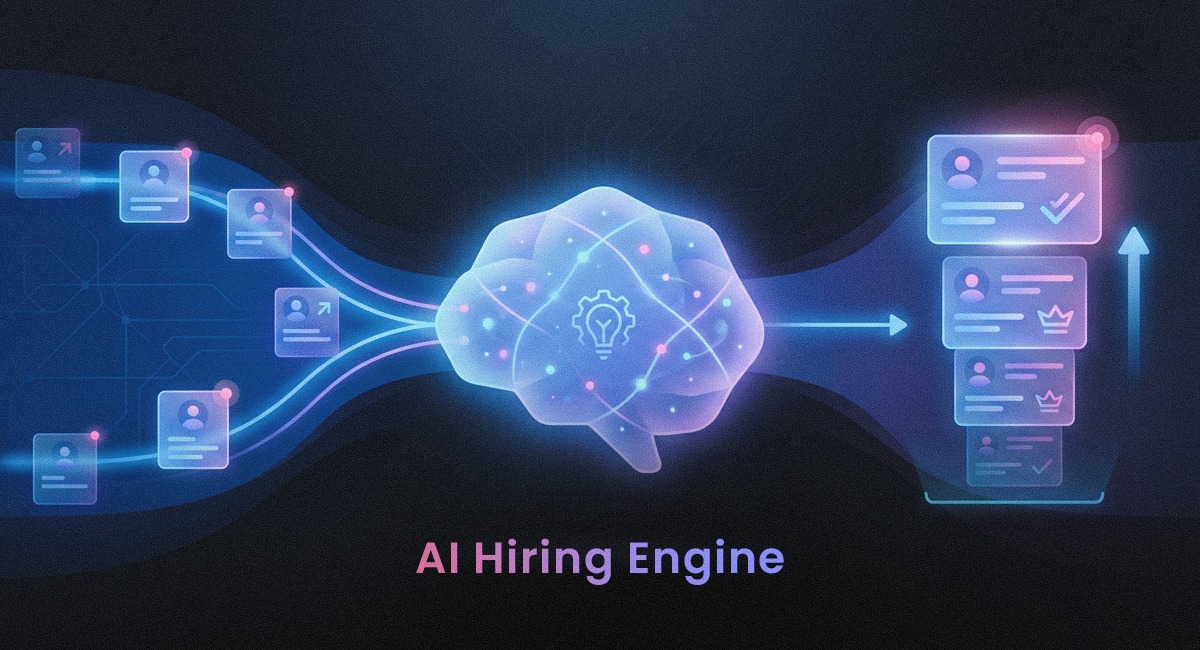
  • Top 6 Core Values Our AI Hiring Engine Follows

    Top 6 Core Values Our AI Hiring Engine Follows

    [tldr title=”Key takeaways”]

    • ConnectDevs is built on six core values: innovation, evidence over buzzwords, global reach with context, integrity, speed without compromise, and long-term partnership.
    • Instead of keyword filtering, the Sourcing & Matching Agent uses role intent to surface higher-signal Shortlists..
    • Built-in enrichment and structured interviews through the Interview Agent (SAM) prioritize proof over resume promises.
    • The platform is designed to reduce manual friction while keeping human judgment central.
    • The outcome: an intelligence-led hiring workflow that replaces resume roulette with structured, decision-ready signal.
    • [/tldr]

      In the crowded landscape of recruitment technology, “AI” has become a label used by almost every platform. At ConnectDevs, artificial intelligence is not a bolt-on feature; it underpins how we think about hiring. We did not build another Applicant Tracking System (ATS) to manage the chaos better, we built a Hiring Intelligence Platform designed to reduce it.

      Our mission is simple: move the industry from volume to value. That mission is guided by six core values that shape how our agents work together, how SAM, our Expert Interview Agent, conducts interviews, and how we surface decision-ready signals to your dashboard.

      Here are the six pillars behind how we design and operate the ConnectDevs Hiring Intelligence Platform.

      1. Innovation at the Core

      The Industry Standard:

      Traditional recruitment is reactive. You post a job, wait for applications, and manually sift through resumes. It’s a linear process designed for a different era.

      The ConnectDevs Way: Intent-led, not list-led.

      For us, innovation means using AI to fundamentally rethink, not just digitize, hiring workflows.

      Instead of forcing you to build Boolean strings, ConnectDevs uses role intent understanding together with Scout, our Talent Sourcing Agent, to understand what you actually need: responsibilities, seniority, tech stack, and context. When you search for a “Senior React Engineer,” the system does not just look for the word “React,” it looks for patterns that suggest architectural ownership, state management depth, and relevant delivery history.

      Under the hood, we combine modern language models, large-scale talent graph analysis, and ranking systems that are designed to support human judgment with a clearer signal. We continuously refine these models based on feedback and real-world usage rather than chasing every new buzzword.

      Key Takeaway: We don’t aim to mimic existing workflows with AI; we redesign them around role intent and evidence.

      2. Proof Over Promises

      The Industry Standard:

      “Resume roulette.” Candidates learn to optimize for keywords and presentation. You interview someone who looks ideal on paper, only to find they struggle with fundamentals.

      The ConnectDevs Way: Evidence-driven profiles.

      In an era of AI-written resumes and cover letters, evidence is more valuable than ever. “Proof Over Promises” means we prioritize observable signals over self-description.

      ConnectDevs uses:

      • Built in enrichment to complete and structure candidate profiles, checking experience for consistency, and surfacing portfolio links and work history signals.
      • SAM, our Expert Interview Agent, runs structured, role-aware interviews that capture how candidates reason, communicate, and solve problems.

      Instead of relying solely on what candidates say they can do, you see Interview Reports, competency insights, and enriched profiles that make it easier to distinguish a strong signal from noise.

      Not every candidate will go through every layer for every role, but the core principle is constant: we try to show you why a candidate looks promising, not just that they do.

      Key Takeaway: We anchor hiring decisions in structured evidence and clear signals, not buzzwords.

      3. Global Reach, Local Impact

      The Industry Standard:

      Local agencies and small networks tend to surface talent within a narrow geography, which often isn’t enough for specialized or senior roles.

      The ConnectDevs Way: Global graph, targeted matches.

      Talent is globally distributed; opportunities rarely are. ConnectDevs taps into an 800M+ profile talent graph, enabling you to think beyond a single city or time zone when appropriate.

      Our sourcing stack, driven by Scout, can look for:

      • Python experts in Brazil
      • DevOps engineers in Poland
      • Frontend specialists in San Francisco
      • And many more combinations, based on your role intent

      But “Global Reach” without context isn’t helpful. That’s why we also factor in practical constraints such as time zone overlap, collaboration patterns, and role expectations. The goal is to support distributed teams that can actually operate smoothly, not just to expand reach for its own sake.

      Key Takeaway: More and more top professionals are moving to ConnectDevs, so your next key hire may not live in your headquarters zip code. We give you a structured way to find and evaluate them from our pool of candidates, wherever they are.

      4. Integrity & Security

      The Industry Standard:

      Remote and high-volume hiring can suffer from inflated experience, inconsistent information, and low-quality data, which erodes trust in the pipeline.

      The ConnectDevs Way: Data quality and responsible handling.

      As we use AI to scale hiring, we also have to scale integrity, both in data quality and how we handle it.

      On the candidate side, our enrichment systems and matching systems are designed to:

      • Highlight inconsistent or unclear experience patterns
      • Surface missing or incomplete data for human review
      • Provide a clearer context around work history and skills

      On the data-handling side, we design our systems with:

      • A focus on data minimization (using only what is necessary for hiring decisions)
      • Role-based access controls for sensitive information
      • A privacy-first approach that treats both client and candidate data as assets to protect, not resources to exploit

      We don’t position AI as a perfect fraud detector or make certification claims we haven’t achieved. Instead, we treat integrity as an operational standard: clarity of signal, transparency of logic, and care for the data entrusted to us.

      Key Takeaway: Trust comes from consistent, explainable systems and careful handling of data, not promises of infallible detection.

      5. Speed Without Compromise

      The Industry Standard:

      You can have it fast, or you can have it good. Many processes end up being slow and still chaotic.

      The ConnectDevs Way: Precision at practical velocity.

      Time-to-hire is a critical business metric, but compressing it by skipping steps leads to costly mis-hires. Our focus is to reduce wasted time, not thoughtful time.

      We do this by:

      • Letting you describe roles in plain language and using intent-based matching to create shortlists quickly.
      • Using SAM to standardize first-round interviews asynchronously, so your team only meets candidates who have already demonstrated baseline capabilities.
      • Providing decision-ready reports that let hiring managers evaluate candidates in minutes instead of building their own frameworks from scratch.

      The result is typically a shorter, more focused process, not because corners are cut, but because repetitive, low-value tasks are handled by the platform. Your team spends time where it matters: final interviews, offer alignment, and onboarding.

      Key Takeaway: We use automation to remove friction, not judgment. The goal is to move faster and maintain quality.

      6. Partnership Mindset

      The Industry Standard:

      Many job boards and marketplaces are transactional. You pay for visibility or a placement; the relationship ends at the invoice.

      The ConnectDevs Way: Long-term alignment.

      We design ConnectDevs to act as an extension of your talent function, not just another tool in the stack. A partnership mindset for us means:

      • Aligning our AI workflows with your hiring priorities and role definitions
      • Providing a clear view of how candidates were sourced, matched, and evaluated
      • Offering transparent, usage-based, or flat pricing instead of percentage-based fees that penalize successful hiring

      Our aim is to help you build a repeatable, intelligence-led hiring engine, not just fill one role and move on.

      Key Takeaway: We focus on building a hiring system that compounds value over time, instead of chasing one-off transactions.

      Conclusion: The Future Is Intent-Driven

      Innovation, Proof, Reach, Integrity, Speed, and Partnership are not just brand words, they are design constraints for how we build and refine the ConnectDevs platform.

      The old model of hiring, high volume, low signal, keyword-led decisions, is becoming harder to justify in a world where AI can parse intent, structure data, and surface evidence at scale. The advantage now goes to teams that can combine intent-driven AI with experienced human judgment.

      ConnectDevs is built for that future:

      • Scout understands what you are really hiring for and applies role intent to sourcing and matching.
      • Built-in enrichment improves the quality and completeness of candidate data.
      • SAM turns interviews into structured, decision-ready signals.

      If you want to see how these values translate into an actual workflow for your team, book a demo and explore what a values-driven Hiring Intelligence Platform looks like in practice.

  • Stop Applying. Start Getting Matched: Why Top Professionals Are Moving to ConnectDevs

    Stop Applying. Start Getting Matched: Why Top Professionals Are Moving to ConnectDevs

    [tldr title=”Key takeaways”]

    • Traditional job boards reward keyword hacks and mass applications, not real skill depth.
    • ConnectDevs uses intent-based matching through the Sourcing & Matching Agent to surface professionals based on real capabilities, not resume wording.
    • Built-in enrichment and structured AI interviews with the Interview Agent (SAM) turn your experience into verified, reusable skill signal.
    • You interview once, generate a structured report, and get discovered for aligned roles without constant re-applying.
    • The shift: stop broadcasting applications and start getting matched based on demonstrated ability and decision-ready signal.
    • [/tldr]

      If you are a software engineer, designer, or product manager in 2026, the job hunt may feel less like a professional search and more like a lottery. You spend hours tailoring your resume, writing cover letters that rarely get read, and battling Applicant Tracking Systems (ATS) that block you because you didn’t include the exact keyword “microservices” enough times.

      The modern hiring process is often misaligned with talent. It favors people who know how to “hack resumes,” not the ones who are good at writing code, designing systems, or shipping products.

      At ConnectDevs, we approach this differently. We are not a job board where you broadcast applications into a void. We are a Hiring Intelligence Platform with an intent-based matching system, powered by agents like Scout and SAM, that works on your behalf.

      Here’s why many professionals are choosing ConnectDevs to manage their careers, and how you can join them in minutes.

      Why Professionals Choose ConnectDevs

      We built ConnectDevs to solve the specific frustrations that high-performing talent faces on LinkedIn, job boards, and traditional agencies. These are six core principles we optimize for on the talent side.

      1. Fair, Transparent Pay

      One of the most exhausting parts of the job search is going through multiple rounds of interviews only to discover the salary is far below your expectations.

      The Principle: We prioritize companies with defined budgets and realistic compensation ranges before they access our talent pool.

      The Benefit: You’re not competing in “race-to-the-bottom” bidding wars. Whether you’re seeking a full-time role or a high-value contract, opportunities surfaced to you aim to be aligned with market realities and your stated expectations.

      2. AI-Powered Matching (Intent Over Keywords)

      Traditional ATS workflows are limited. If a recruiter searches for “React” and your profile says “JavaScript/Frontend” but doesn’t repeat “React,” you might be invisible in their search.

      The Difference: ConnectDevs uses intent based matching driven by role intent understanding together with Scout, the Talent Sourcing Agent. The system understands relationships between tools, stacks, and roles. If you’ve shipped production work with Next.js for five years, it implies React. If you’re a Data Scientist who has shipped PyTorch models, it understands your relevance to Machine Learning Engineer roles.

      The Benefit: You’re matched based on real capabilities and experience patterns, not just how closely your resume mirrors a job description’s keywords.

      3. Flexible Engagements

      The world of work isn’t only “9-to-5” anymore. Many senior professionals prefer high-impact contract work, while others want the stability of equity, benefits, and a long-term role.

      The Principle: ConnectDevs supports full-time, part-time, and project-based engagements.

      The Benefit: You set your preferences. Whether you want to moonlight on focused projects alongside your current role or dive into a full-time position at a growing startup, the matching engine factors in how you prefer to work.

      4. Faster, More Focused Outcomes

      In many tech markets, hiring decisions stretch across weeks. Candidates sit in limbo, unsure where they stand.

      The Principle: By combining AI-powered screening, enrichment, and structured interviews, ConnectDevs helps companies move from “first look” to “decision-ready” much faster.

      The Benefit: When employers view your profile, they already see a consolidated signal: your experience, enriched profile data, and an AI Interview Report from SAM (our Expert Interview Agent). That means fewer redundant intro calls and more conversations that start closer to a serious interview or offer discussion.

      5. Respect for Talent

      Most professionals have encountered “take-home assignments” that consume an entire weekend. Frequently, this work is never used, never reviewed in depth, or never compensated.

      The Principle: We advocate for assessment formats that respect your time and focus on signal, not free labor.

      The Benefit: Our AI-led assessments and interviews are designed to validate your skills without requiring you to build a full feature for free. Your existing portfolio, combined with structured interviews through SAM, provides enough depth for most early-stage evaluations.

      6. Skill-Focused Discovery

      On many platforms, the loudest people often get the most visibility. On ConnectDevs, we emphasize demonstrated skills and real experience.

      The Principle: Your work and your interview signal matter more than your ability to post every day.

      The Benefit: SAM, our Expert Interview Agent, digs into your technical and problem-solving depth through a structured AI interview. If you prefer building over self-promotion, SAM helps surface that strength to employers. You don’t have to be a “LinkedIn influencer” to be discovered.

      How It Works: The 3-Step Workflow for Talent

      Getting started is intentionally streamlined. We know you’d rather build things than manage another admin-heavy profile.

      Step 1: Show What You’ve Built (Profile Setup)

      Forget retyping your work history from scratch.

      Action: You upload your resume, link your GitHub/portfolio, and set your preferences (role type, compensation range, tech stack, and availability).

      Enrichment: Built in AI enrichment automatically creates more complete and trustworthy profiles and enhances your profile with additional context where possible. It fills obvious gaps, standardizes your data, and prepares it for intent based matching, without you needing to hire a professional resume writer.

      Signal & Consistency Checks: Automated checks surface obvious inconsistencies and missing details so our team and clients can review with clearer context. This isn’t a formal background check, but it helps maintain a higher-quality talent pool and increases confidence in your profile.

      Step 2: Meet SAM (Your AI Interview)

      This is where your skills are turned into a structured signal. Instead of repeating your “elevator pitch” to multiple recruiters, you do one structured assessment.

      Action: You engage in a chat or voice session with SAM, our Expert Interview Agent.

      The Experience: SAM asks role-specific questions based on your profile and preferences. If you’re a Backend Engineer, you may discuss topics like database trade-offs, concurrency, or API design. SAM listens to your answers, asks follow-up questions, and focuses on how you think through problems.

      The Outcome: SAM generates an AI Interview Report that is attached to your profile. When companies view you in ConnectDevs, they see more than a claim that you “know Python,” they see structured evidence of how you reason and communicate. You complete the interview once and can reuse that signal across many relevant opportunities.

      Step 3: Land Roles That Actually Fit

      Once your profile is enriched and your AI Interview Report is live, ConnectDevs starts doing more of the heavy lifting.

      Action: You don’t spend your days mass-applying. You keep your profile up to date and stay open to relevant matches.

      The Experience: When companies search for your skill set, candidates who are “Ready” (with complete profiles and interview signals) are easier to discover and prioritize. Your profile appears in context for roles where there is real alignment between your experience and the job intent.

      The Result: You receive interview requests from hiring teams who already have a baseline understanding of your skills. More conversations begin with “Is there mutual fit?” rather than “Are you actually qualified for this?”

      A Note on “Black Box” Systems vs. Transparency

      Many candidates are understandably concerned that AI will quietly filter them out. That’s a real issue with some traditional systems, which often treat AI as a gatekeeper.

      ConnectDevs is built to work differently.

      We use AI to surface your strengths, not to hide them.

      Traditional filtering: “This resume doesn’t include the word ‘Leadership,’ reject it.”

      ConnectDevs-style matching: “This candidate describes leading a team of 5 in their project description, even if they didn’t list ‘Leadership’ as a keyword. Treat this as a leadership signal.”

      Instead of relying on a single keyword match, the platform looks at your profile, linked work, and interview signals together. The goal is to give employers a fuller picture of your capabilities so they can argue for your candidacy, not against it.

      Ready to Upgrade How You Look for Work?

      The best opportunities are often not visible on public job boards. Many are filled through targeted searches for specific skills and experience.

      By joining ConnectDevs, you move from shouting into crowded feeds to being part of a curated talent pool where your skills are easier to discover, understand, and trust. Joining as talent is free; employers are the ones who pay to access and hire through the platform.

      Stop applying. Start getting matched.

      Create your profile, meet SAM once, and let the signal you’ve already earned start working a lot harder for you

  • The End of “Calendar Tetris”: How AI Is Rewriting the Hiring Playbook for Modern Managers in 2026

    The End of “Calendar Tetris”: How AI Is Rewriting the Hiring Playbook for Modern Managers in 2026

    [tldr title=”Key takeaways”]

    • Traditional hiring is overloaded by mass applications, AI-generated resumes, and manual scheduling friction (“calendar Tetris”).
    • ConnectDevs replaces keyword guesswork with role intent understanding, powered by the Sourcing & Matching Agent (Scout).
    • Shortlisted candidates complete structured, asynchronous interviews with the Interview Agent (SAM), standardizing first-round screening.
    • Hiring managers receive decision-ready reports instead of scattered notes and repetitive calls
    • The result: faster pipelines, reduced manual coordination, and higher-signal decisions—while humans remain in control of final hiring choices.

    [/tldr]

    If you are a hiring manager or a founder, you know the sinking feeling of opening your inbox after posting a job. It used to be exciting; now it is often dreadful. You may be staring at hundreds or even thousands of applications. Your Applicant Tracking System (ATS) is flooded. And yet, despite the overwhelming volume, it still feels like there’s nobody clearly hireable.

    The traditional hiring pipeline is failing. It was built for a world where resumes were scarce and manual screening was manageable. Today, AI tools allow candidates to mass-apply and rewrite resumes to mirror job descriptions, which makes simple keyword filters far less reliable.

    While you’re buried in noise, trying to schedule screening calls and playing “calendar Tetris” across time zones, your competitors are shipping new features. They aren’t just working harder; they’re hiring differently.

    At ConnectDevs, we’ve rethought this process from the ground up. Instead of a long, multi-step, 60-day cycle, we focus on a streamlined triad of agents and a three-step workflow designed to take you from “requirement” to “decision-ready” with far less manual friction.

    Here’s how the process works, and why modern teams are moving toward AI-powered, intelligence-led hiring.

    The Core Problem: Why the Old Process Is Breaking Down

    Before looking at the solution, it’s worth being honest about why the current model struggles under modern conditions.

    Buried in Noise

    Job boards give you volume, not necessarily value. Sifting through hundreds of unqualified applicants to find one “maybe” is a poor use of a hiring manager’s time and attention.

    The “AI Resume” Mirage

    Candidates now routinely use generative AI to rewrite their CVs. Everyone sounds like a “team player” with “strong communication skills.” Standard ATS software ranks them similarly because it focuses on keywords, not underlying evidence.

    Speed and Opportunity Cost

    In many markets, by the time a traditional process surfaces a strong candidate, that candidate has already progressed with another company. Slow screening and scheduling directly translate into lost opportunities.

    ConnectDevs tackles these problems by reducing manual friction across three critical stages of hiring, using role intent understanding together with Scout, the Smart Sourcing Agent, and SAM, the Expert Interview Agent.

    Step 1: Input & Instant Discovery
    (Reducing Keyword Guesswork)

    In traditional hiring, the first step often involves writing a complex Boolean string or hoping the right person happens to see your LinkedIn post.

    With ConnectDevs, the process begins with plain-language input. You describe your role in your own words, for example:

    “I need a Senior Backend Engineer who specializes in Python and has experience with scalable AWS infrastructure.”

    How It Works: Role Intent and Scout

    Instead of matching literal keywords, the platform interprets the intent behind your requirement, seniority, responsibilities, tech stack, and likely ownership level. From there, Scout, the Smart Sourcing Agent, searches a large global talent graph of more than 800 million profiles and prioritizes candidates based on fit. Crucially, this includes both active and open to opportunity professionals, not just people actively applying on job boards.

    You’re not guessing at keywords; you’re describing the outcome you need.

    The Result: From “Post and Pray” to “Describe and See”

    Old way:
    Post a job, wait weeks for applications, and manually filter a large volume of resumes.

    ConnectDevs way:
    Enter requirements → receive an intent-aligned, AI-curated shortlist.

    You’re presented with a focused list of candidates that match your stack and seniority requirements, surfaced by Scout rather than a raw keyword search.

    Step 2: Automated AI Screening
    (Scaling Your Interviewing Capacity)

    Once you have a shortlist, the bottleneck usually tightens. A recruiter or hiring manager needs to reach out, schedule a “quick call,” coordinate time zones, and repeat a similar conversation with each candidate.

    ConnectDevs compresses this stage with Automated AI Interview Invites powered by SAM, the Expert Interview Agent.

    SAM: The Expert Interview Agent

    After you shortlist candidates from the discovery phase, you can send interview invites in a few clicks. These aren’t direct invites to your calendar; they’re invitations to complete an AI-led interview with SAM.

    SAM conducts a role-specific assessment that focuses on how candidates think and communicate about relevant problems.

    Because SAM is an AI Interviewer embedded in your workflow, it offers two key advantages:

    Asynchronous Flexibility

    Candidates can complete interviews at a time that suits them, whether that’s late evening or early morning, without needing to align with your schedule. This makes it easier to engage busy or passive talent.

    Consistent Structure and Depth

    Every candidate faces a structured set of role-appropriate questions. Instead of generic “tell me about yourself,” SAM probes into concrete topics (for example, React hooks, database trade-offs, memory management, or incident response, depending on the role).

    This step doesn’t replace human interviews; it standardizes and scales the first round. Engineering time is focused on candidates who have already demonstrated baseline competency and communication skills.

    Step 3: Review & Decide
    (From Gut Feel to Decision-Ready Reports)

    In a traditional process, reviewing candidates often means comparing scattered notes from multiple calls and relying on partial memory. It’s subjective, hard to audit, and difficult to scale.

    With ConnectDevs, the outcome of the AI interview is a Decision-Ready Report inside your dashboard.

    Beyond the Transcript

    You can view the full transcript if you want, but you don’t have to start there. The report surfaces:

    Technical Assessment:
    A structured view of how the candidate performed on role-specific questions.

    Communication & Reasoning:
    Observations on how clearly they explained trade-offs, decisions, and problem-solving steps.

    Signals & Concerns:
    Highlighted areas that may warrant follow-up in a live, human-led interview, such as unclear reasoning, gaps in knowledge, or topics worth probing deeper.

    The “Hire Smarter” Advantage

    Instead of spending hours on first round calls, you can use the ConnectDevs Hiring Intelligence Platform to:

    • Scan a summary in minutes.
    • Compare candidates side by side on like for like criteria.
    • Decide who should move directly to a final interview or stakeholder panel.

    The emotional fatigue of back-to-back early-stage interviews is reduced. Your focus shifts to fewer, higher-value conversations closer to the decision point.

    The ROI of an Intelligence-Led Workflow

    Why does this specific three-step workflow matter? It comes down to opportunity cost and focus.

    Every hour a hiring manager spends reading cold resumes or running repetitive screens is an hour not spent on product, strategy, or team leadership.

    In many markets, traditional agencies may:

    • Charge significant percentage-based fees on first-year salary.
    • Take weeks to assemble and present shortlists.

    ConnectDevs is built as a Hiring Intelligence Platform with a subscription style model and an integrated agentic workflow:

    By following a simple Input → Match → Interview → Report flow, powered by Scout, Pilot, and SAM behind the scenes, you systematically remove low value manual steps that have slowed hiring for years, without removing human judgment where it matters most.

    Ready to Ship Faster: With Less Calendar Tetris?

    The market doesn’t pause while your team wrestles with ATS exports and scheduling spreadsheets. While some organizations are still juggling time zones and keyword filters, others are building a more intelligent, streamlined hiring stack.

    ConnectDevs helps modern teams:

    • Move from unstructured resumes to structured, decision-ready signals.
    • Spend less time on coordination and more time on final, high-impact conversations.
    • Treat sourcing, interviewing, and review as one connected intelligence layer instead of three disconnected workflows.

    If you are ready to rethink how your team hires, beyond job posts and calendar Tetris, consider what your next role could look like with a single connected workflow instead of a 60 day checklist.

    Enter your requirements once, let the agents handle discovery, screening, and reporting, and then do what humans do best: make the final call.

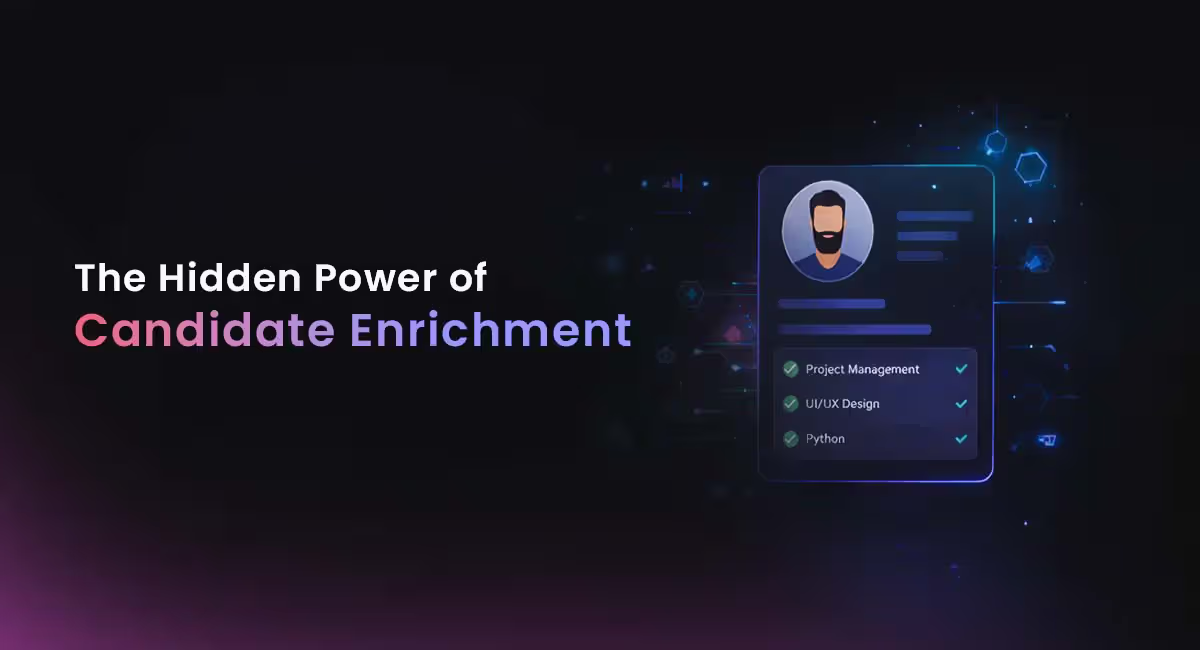
  • How AI Candidate Enrichment Creates More Complete and Trustworthy Profiles

    How AI Candidate Enrichment Creates More Complete and Trustworthy Profiles

    [tldr title=”Key takeaways”]

    • Most resumes are incomplete, inconsistent, or inflated, which delays screening and increases hiring risk.
    • AI candidate enrichment fills data gaps, validates experience patterns, and surfaces reliability signals before interviews begin.
    • The ConnectDevs Enrichment Agent checks employment, education, skills, and digital footprint consistency to create structured, evidence-backed profiles.
    • Enriched data improves matching accuracy, Shortlist quality, outreach success, and interview precision.
    • Stronger hiring decisions start with better data—enrichment turns raw resumes into decision-ready signal across the full pipeline.
    • [/tldr]

      Hiring teams today deal with a major challenge that slows down decision-making and increases the risk of bad hires: most candidate profiles are incomplete. Important data is missing, inconsistent, or outdated. Resumes often lack verifiable details such as previous roles, practical experience levels, education history, or correct contact information. In some cases, profiles contain inflated achievements or vague responsibilities. In 2026, the rise of AI-generated resumes has made it even harder for recruiters to separate genuine talent from low-signal applications.

      This is why candidate enrichment, AI-powered enrichment, and structured candidate checks have become essential parts of the hiring workflow. Instead of relying only on the information candidates provide, modern platforms enrich profiles using multi-source intelligence. This means filling in missing data, discovering additional context, checking experience against available signals, and improving overall credibility.

      In this blog, we’ll explore how AI candidate enrichment, AI recruitment tools, and hiring intelligence platforms like ConnectDevs are changing the way companies evaluate talent. You’ll also see how enrichment directly improves screening accuracy, shortlisting quality, and hiring confidence.

      Why Incomplete Candidate Data Delays Hiring

      Every recruiter has felt the frustration of receiving resumes that are missing critical information. Candidates leave out important experience details, forget to mention tools they’ve used, or fail to add portfolio links. When this happens at scale, recruitment teams lose hours manually searching Google, LinkedIn, GitHub, and other sources to verify or complete candidate data.

      Common data gaps include:

      • Missing email or phone number
      • No links to portfolio, GitHub, or personal site
      • Unverified or vague job titles
      • No employment dates or unclear timelines
      • Incomplete education information
      • Unclear responsibilities or achievements
      • Inconsistent seniority claims

      These gaps create delays and increase the chance of interviewing the wrong people. They can also lead to weak hiring decisions because the initial screening was based on partial or low-quality data. This is where the power of AI candidate enrichment becomes extremely valuable.

      What Is AI Candidate Enrichment?

      AI candidate enrichment is the automated process of expanding and checking a candidate’s profile using multiple public and system-level data sources. Instead of relying only on the resume, the AI gathers and cross-references information to build a more complete, structured representation of the candidate.

      Modern AI candidate enrichment platforms typically perform tasks such as:

      • Collecting missing contact information where available
      • Validating employment history against visible digital footprints
      • Checking education details for consistency
      • Discovering relevant portfolio or project links
      • Relating claimed skills to observable work signals
      • Highlighting inconsistent or unlikely experience patterns
      • Providing summary indicators that help prioritize review

      The goal is not to replace human judgment, but to give recruiters a more complete, evidence-backed profile so they can make informed decisions with greater confidence, especially in high-volume environments.

      How AI Enrichment Works Inside ConnectDevs

      Within ConnectDevs, the Candidate Enrichment Agent operates like an intelligent research system that works behind the scenes. It improves every profile in the platform by completing data gaps, checking information, and organizing a clearer identity footprint that connects to sourcing, matching, and interviews.

      Here’s how the process works at a high level:

      1. Profile Scanning and Data Collection

      Once a candidate enters the pipeline or is added to a Shortlist, the Enrichment Agent scans reliable sources to fill in missing details where possible, such as contact data, role history, public links, or relevant profiles.

      2. Employment and Education Consistency Checks

      The system evaluates job history and education listings for consistency with the candidate’s visible digital footprint. It flags areas that look incomplete or unclear so recruiters can review them rather than assuming everything is accurate.

      3. Skill Pattern Analysis

      ConnectDevs analyzes the relationship between claimed skills and observable indicators (projects, repositories, role descriptions, and more). This helps assess whether a candidate’s skills appear aligned with their experience, instead of treating every listed skill as equally proven.

      4. Digital Identity Signals

      The Enrichment Agent surfaces potential inconsistencies such as unusual jumps in seniority, overlapping timelines, or conflicting role descriptions. These signals prompt human reviewers to take a closer look where needed.

      5. Profile Quality Indicators

      Based on multiple data points, the system produces summary indicators around profile completeness and reliability. These are used to help recruiters prioritize which profiles to review first, not to make automated hiring decisions.

      6. Seamless Workflow Integration

      All enriched data flows directly into the candidate’s profile inside the ConnectDevs dashboard. This enriched record is then available to the Role Intent Engine, the Sourcing & Matching Agent, and the Interview Agent (SAM), supporting more accurate screening, ranking, and interviews across the full pipeline.

      Why Enrichment Matters Before Interviews

      Many hiring teams move straight into interviews without validating basic candidate information. This often leads to:

      • Wasted interview time on incomplete or misaligned profiles
      • Conversations with candidates who lack critical requirements
      • Late-stage discovery of mismatches
      • Higher candidate drop-off due to poor fit or unclear expectations
      • Time lost on post-interview verification and backtracking

      When enrichment happens first, teams avoid many of these problems because they already know which profiles are more complete, credible, and relevant.

      Here are key reasons why AI candidate enrichment turns raw profiles into verified intelligence:

      1. More Reliable Interview Candidates

      Recruiters can prioritize candidates whose experience, education, and skills have been checked for basic consistency, leading to more productive conversations.

      2. Higher Outreach Success

      Enriched profiles include more accurate and complete contact details, which support better deliverability and response rates when using outreach tools or integrated campaigns.

      3. Reduced Low-Quality Noise

      By surfacing inconsistencies and missing data early, enrichment helps teams remove low-signal or clearly misaligned profiles before they reach interview stages.

      4. More Accurate Screening

      Interview questions and evaluation criteria become sharper and more tailored when the candidate’s background is clearer. Recruiters and hiring managers can focus on depth instead of basic clarification.

      5. Better Matching Results

      Did you know that Intent-Based AI Matching will outperform Keyword Search in 2026? It’s true that intent-based matching and AI candidate ranking work best when they have richer data to learn from. Enriched profiles give matching engines more context, improving the quality of recommendations and Shortlists.

      Real Use Cases Where AI Candidate Enrichment Creates Impact

      Agencies Verifying Large Batches of Candidates

      Talent agencies often handle hundreds of resumes across many roles. AI enrichment helps them quickly clean, complete, and prioritize profiles so they can deliver vetted lists faster to clients.

      Startups Hiring Without Dedicated Recruiters

      Founders and small teams can rely on enrichment to filter out low-quality or incomplete profiles early, allowing them to focus on high-potential candidates without building a full research function in-house.

      Corporates Cleaning Outdated Talent Databases

      Large companies often sit on years of legacy candidate data. Enrichment helps refresh old records, update contact details where possible, and restore usability to internal databases.

      Sales or Outreach Teams Building Prospect Lists

      Accurate and enriched contact data improves outbound sequences, whether for recruitment, partnerships, or community-building.

      Teams Hiring for Sensitive or High-Trust Roles

      For roles in finance, security, healthcare, or high-access environments, better-checked profiles are essential. Enrichment supports a more thorough review by organizing the facts and highlighting where further manual verification may be needed.

      How ConnectDevs Stands Out From Other Enrichment Tools

      Most basic enrichment tools focus only on appending emails or social links. ConnectDevs is designed as part of a broader hiring intelligence stack, so enrichment goes significantly beyond simple lookup.

      The Enrichment Agent combines:

      • Skill pattern and relevance checks
      • Cross-profile consistency signals
      • AI-assisted resume and profile analysis
      • Employment history consistency checks
      • Education detail validation
      • Portfolio and project discovery
      • Profile completeness and reliability indicators

      Instead of treating enrichment as an isolated feature, ConnectDevs connects this layer directly to the Role Intent Engine, the Sourcing & Matching Agent, Shortlists, and the Interview Agent (SAM).

      Instead of keeping enrichment separate, ConnectDevs builds it into every step, from the Role Intent Engine and Scout (Talent Sourcing Agent) to your Shortlists and SAM (Expert Interview Agent). This makes the enriched profile a core asset for AI sourcing, AI screening, and structured interviews, not just a static data record.

      The Future of Enriched Profiles

      AI is evolving quickly, and AI candidate enrichment is becoming more sophisticated. Across the broader ecosystem, we can expect experimentation with capabilities such as:

      • Richer modeling of career paths and role trajectories
      • More nuanced skill proficiency indicators
      • More frequent, automated updates to candidate records
      • Deeper context around project impact and scope

      These should be viewed as decision-support tools rather than automated verdicts. As enrichment improves, the role of recruiters and hiring managers remains central: interpreting the data, asking better questions, and making final calls.

      Teams that adopt enrichment early position themselves ahead of the curve, with cleaner data, clearer profiles, and faster time-to-insight on every candidate they review.

      Conclusion

      Hiring decisions are only as strong as the data behind them. Incomplete or inaccurate candidate information creates delays, misalignment, and preventable mis-hires. AI candidate enrichment and structured, data-backed checks give hiring teams the context they need to move faster and with more confidence.

      The ConnectDevs Enrichment Agent completes profiles, checks experience for consistency, and surfaces trustworthy insights that improve every stage of the hiring process, from sourcing and Shortlists through to interviews and offers. If your team wants more reliable shortlists, stronger interviews, and better long-term hires, enriched candidate data isn’t a nice-to-have; it’s becoming a core layer of a modern, intelligence-led hiring stack.

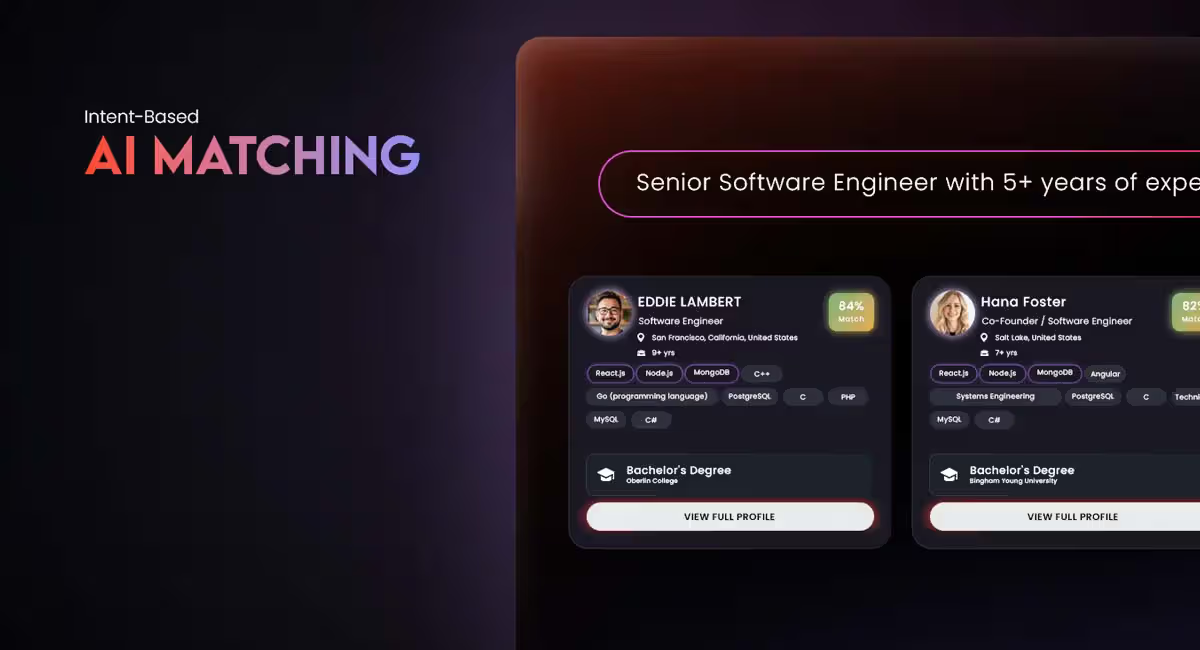
  • Why Intent-Based AI Matching Outperforms Keyword Search in 2026

    Why Intent-Based AI Matching Outperforms Keyword Search in 2026

    [tldr title=”Key takeaways”]

    • Keyword search rewards resume formatting, ignores role context, and creates shallow, one-dimensional matches at scale.
    • Intent-based AI matching understands responsibilities, seniority, skill relationships, and real role expectations.
    • Instead of filtering by words, the system evaluates experience patterns, ownership scope, and demonstrated outcomes.
    • The result: faster sourcing, reduced noise, stronger candidate alignment, and more decision-ready signal—without removing humans from final hiring decisions
      • [/tldr]

        Recruiters and founders have spent years relying on keyword-based search to find candidates. Whether using job boards, Boolean strings, or manual resume screening, keyword matching has always been a fragile process that rewards formatting rather than actual ability. In 2026, this approach will no longer be enough. Hiring volumes are growing, roles are becoming more specialized, and job descriptions change faster than keyword databases can keep up.

        The rise of AI talent sourcing, AI matching, and intent-based matching is transforming how companies discover and shortlist candidates. Instead of filtering resumes by surface-level terms, advanced models now understand context, responsibilities, seniority expectations, and skill relevance. This shift gives hiring teams faster pipelines and a stronger signal, while reducing reliance on manual first-pass screening.

        In this blog, we explore why AI candidate ranking, AI hiring, and contextual AI search are outperforming traditional keyword-based tools. We also show how ConnectDevs, a hiring intelligence platform powered by the Scout Talent Sourcing Agent, uses intent-driven matching across an 800M+ profile talent graph to deliver higher-quality shortlists in minutes.

        Why Keyword Search Fails at Scale

        Keyword search was created for an era where resumes were more standardized, and hiring teams processed a predictable number of applicants. In modern recruiting, keyword filtering introduces several problems.

        1. Keywords Reward Formatting Instead of Ability

        Candidates who know how to stuff resumes with keywords often appear more qualified than they are. Meanwhile, strong candidates with cleaner, more honest resumes may be filtered out simply because they don’t mirror the exact wording in the job description.

        2. Keyword Search Ignores Role Context

        The phrase “senior developer” means something different for a fintech platform than for a consumer app or a B2B SaaS product. Traditional systems look for literal matches, not the underlying responsibilities, tech stack, or ownership level implied by the role.

        3. Skills Evolve Faster Than Keyword Lists

        AI, cloud, and product roles evolve every few months. New tools appear, old frameworks are replaced, and responsibilities shift. Static keyword lists and manually maintained taxonomies struggle to keep up with this rate of change.

        4. Matches Are Shallow and One-Dimensional

        Matching a keyword like “Python” doesn’t tell you whether a candidate can architect distributed systems, ship production code, or lead a cross-functional initiative. It just confirms the word appears somewhere in a document.

        Because of these limitations, hiring teams need something more powerful and context-aware than static keyword matching.

        What Is Intent-Based AI Matching?

        Intent-based matching uses modern language models to understand the meaning behind a job description. Instead of filtering for words, the AI interprets what the hiring team actually needs based on skill relationships, responsibilities, and expected outcomes.

        Modern AI talent sourcing platforms analyze job requirements more like an experienced recruiter than a search engine. The AI considers:

        • Core responsibilities
        • Required experience level
        • Related competencies and adjacent skills
        • Industry- and domain-specific signals
        • Preferred tools or methodologies
        • Problem-solving expectations
        • Team structure and collaboration patterns

        This produces a much richer, more accurate representation of what a role truly requires — and which candidates align with that intent.

        How Intent-Based Matching Works Inside ConnectDevs

        Inside ConnectDevs, intent-based matching is driven by Scout, the AI talent sourcing Agent. Scout uses a multi-layer ranking system that evaluates candidates far beyond keyword appearance.

        Here’s how the process works at a high level:

        1. Contextual Job Parsing

        Scout ingests the job description, cleans it, and uses contextual language modeling to understand the role: what success looks like, what the core responsibilities are, and which skills actually matter.

        2. Skill-to-Role Relevance Scoring

        Instead of checking whether a skill string appears on a resume, Scout analyzes how a candidate’s experience, projects, and past roles align with the intent of the job. This supports more precise AI candidate ranking and helps distinguish surface mentions from actual practice.

        3. Learning From Similar Roles and Outcomes

        Over time, the system can incorporate patterns from previous searches and successful placements (where teams provide feedback), helping refine which profiles tend to perform well in similar contexts. This doesn’t replace human judgment, but it gives recruiters a stronger starting point.

        4. Structured, Evidence-Based Ranking

        Rather than claiming “bias-free” decisions, ConnectDevs focuses on structured, evidence-based rankings. Scout uses contextual signals and consistent criteria to score candidates, giving hiring teams a transparent basis for comparison while keeping humans in control of final decisions.

        5. Continuous Match Refinement

        As teams search, shortlist, and hire, the system can improve its understanding of what “good” looks like for different roles and markets. Similar to how experienced recruiters become more accurate over time, the matching logic becomes more aligned with real-world outcomes.

        6. Smart Suggestions and Adjacent Talent

        Beyond direct matches, Scout surfaces adjacent candidates, people who may not match every requirement today but show strong alignment on core skills and trajectory. This helps teams build deeper, future-ready pipelines instead of one-off lists.

        This type of matching allows ConnectDevs to produce high-signal shortlists in minutes, not hours, while giving recruiters clear context behind each recommendation.

        Key Benefits of Intent-Based Matching

        Deeper Accuracy

        Intent-based matching evaluates whether a candidate can perform the responsibilities listed, not just whether their resume contains similar words. It looks at experience patterns, project types, and demonstrated outcomes.

        Better Seniority Alignment

        Scout can factor in leadership indicators, scope of ownership, and project complexity, dimensions that keyword systems struggle to recognize. This helps differentiate a mid-level contributor from someone who has owned strategy or led teams.

        Stronger Experience Matching

        Instead of checking that “Kubernetes” appears on a resume, intent-based matching looks at how and where the candidate used it: for example, maintaining a cluster, designing deployments, or leading a migration.

        Reduced Noise

        Because the engine focuses on role intent and relevance, hiring teams spend less time reviewing obviously off-target matches created by simplistic keyword filters.

        More Consistent, Structured Evaluation

        By using the same intent model and scoring logic for every search, teams get more consistent rankings and a clearer understanding of why certain candidates are surfaced. This helps support more equitable, transparent evaluations than ad-hoc keyword searches alone.

        Use Cases Where Intent-Based Matching Wins

        1. Startups With No Internal Recruiter

        Founders can generate ready-to-review shortlists quickly, without learning complex Boolean strings or sifting manually through hundreds of profiles. Scout handles the heavy lifting, while founders focus on final selection and conversations.

        2. Hiring Teams Screening Multiple Roles

        When multiple roles are open across engineering, product, and go-to-market, intent-based matching helps manage cross-role complexity and rank candidates according to the specific requirements of each position.

        3. Agencies Managing Talent Across Multiple Clients

        Staffing and recruiting agencies can use ConnectDevs to surface better-aligned candidates for each client brief and turn around shortlists faster, without relying solely on manual search and internal spreadsheets.

        4. Teams Hiring in Competitive Markets

        When timing matters, reaching the right candidates first is critical. Intent-based matching helps identify high-potential profiles earlier, so teams can start outreach before their competitors.

        5. Large Applicant Pools

        For roles that attract hundreds of applicants, intent-based matching filters out noise and highlights candidates whose experience and trajectory align with the role, not just those who optimized their resume for keywords.

        How ConnectDevs Outperforms Traditional Search Systems

        ConnectDevs is built to understand the complexity of modern roles. Powered by AI Talent Sourcing Agent – Scout, the platform uses an 800M+ profile graph and layers:

        • Experience patterns across roles and industries
        • Seniority indicators and scope of ownership
        • Skill dependencies and adjacent competencies
        • Industry- and domain-specific role expectations
        • Work history and collaboration signals that matter to hiring teams

        Crucially, ConnectDevs doesn’t stop at search. The platform brings together:

        This creates a connected hiring intelligence stack instead of isolated tools. In recent times, AI Interviewers Are Reshaping Modern Hiring. Recruiters and founders get a single environment where they can go from “define the role” to “review a curated shortlist with interview signal” without rebuilding context at every step.

        The Future of Candidate Search

        In the coming years, contextual matching is likely to evolve further toward more predictive decision-support. Industry-wide, we can expect models that provide richer indicators such as:

        • Likely success in specific types of environments
        • Trajectory signals based on past roles and growth
        • Adaptability across adjacent roles or domains

        These should be treated as inputs, not verdicts, tools that help recruiters ask better questions and prioritize their time, not automated decision-makers.

        Teams adopting intent-based matching today are already ahead of the curve. They’re replacing keyword-driven noise with context-aware, explainable results that better reflect the real demands of modern roles.

        Conclusion

        Keyword-based recruiting struggles in a world where roles evolve quickly, and applicant volumes continue to rise. Intent-based matching, AI talent sourcing, and structured AI candidate ranking offer faster, cleaner, and more accurate shortlists by focusing on role intent and real experience instead of resume formatting.

        Scout, the AI talent sourcing Agent inside ConnectDevs, is built to understand job context, evaluate skill relevance, and refine accuracy with every new search, while keeping recruiters and hiring managers fully in control of final decisions.

        If your team is ready to move beyond keyword noise and adopt an intelligence-first approach to sourcing, intent-based AI matching is a practical, scalable step forward.

  • How AI Interviewers Are Reshaping Modern Hiring: Speed, Consistency, and Better Signal

    How AI Interviewers Are Reshaping Modern Hiring: Speed, Consistency, and Better Signal

    [tldr title=”Key takeaways”]

    • AI interviewers reduce manual screening delays by running structured, domain-aware interviews asynchronously.
    • Traditional interviews slow hiring due to scheduling friction, inconsistent scoring, and subjective evaluations.
    • SAM, the ConnectDevs Interview Agent, conducts chat/voice
    • interviews, scores competencies, and generates structured Interview Reports

    • Recruiters receive standardized evaluations with strengths, risks, transcripts, and decision-ready summaries.
    • AI interviews improve speed, consistency, and signal quality while keeping humans in control of final hiring decisions.
    • [/tldr]

      Hiring teams everywhere are under pressure to move faster, hire smarter, and reduce reliance on manual interviews that often take days to schedule and weeks to complete. Traditional screening methods depend heavily on human availability, subjective impressions, and inconsistent criteria. As recruitment volumes rise and remote hiring becomes standard, teams are turning to AI interviewer technology to streamline the earliest and most time-consuming parts of the hiring cycle.

      ConnectDevs operates as a full-cycle hiring intelligence platform, not just an interview bot. Within our triad of agents, SAM, the Expert Interview Agent, runs structured, domain-aware interviews and gives recruiters a clear view of strengths, risks, and overall fit so they can move with confidence.

      In this blog, we’ll explore how automated interviews, AI hiring tools, and AI screening are transforming modern recruitment. We’ll also walk through the capabilities of SAM, the ConnectDevs AI interviewer, and explain why voice/chat-based evaluations and structured reports are becoming a core layer for future-ready hiring teams.

      Why Traditional Interviews Slow Down Hiring

      Most hiring teams know the pain points associated with early-stage interviews. Recruiters spend hours scheduling candidates, following up, taking notes, and trying to evaluate soft skills on tight timelines. These delays often extend the hiring process by weeks, especially when multiple roles and stakeholders are involved.

      Traditional interviews create problems such as:

      • Scheduling inefficiencies that stretch timelines
      • Inconsistent scoring across different interviewers
      • Subjective bias and mood-driven impressions
      • Limited visibility into how candidates think under pressure
      • Slow feedback loops between recruiters, hiring managers, and clients

      These limitations become even more visible at scale. Agencies, RPOs, and high-growth startups reviewing hundreds of applicants need a faster way to assess communication, reasoning, clarity, and basic role fit, without waiting for manual availability. This is where AI interviewer systems step in as a decision-support layer.

      What Is an AI Interviewer and How Does It Actually Work?

      An AI interviewer is a system that conducts structured interviews without requiring a human to be present on every call. Instead of waiting for a screening round, candidates receive a secure link, join an interview session on their own time, and respond to questions generated by domain-aware models.

      In ConnectDevs, the AI Interview Agent, Sam, is that layer. It runs role-specific interviews, scores core competencies, and produces a structured Interview Report that recruiters can review in minutes.

      Modern AI hiring tools typically combine several capabilities:

      1. Voice- and Chat-Based Interview Delivery

      Candidates interact through asynchronous chat and, where enabled, voice. The system asks structured questions that can be tailored to role, seniority, and function. This creates a more natural experience than static forms while still staying highly consistent across candidates.

      2. Real-Time Language and Communication Analysis

      As candidates respond, the AI evaluates clarity, structure, reasoning, and other communication signals that rarely show up in resumes or portfolios. This gives a richer, more comparable view of how someone explains their work and thinks through problems.

      3. Behavioral and Technical Evaluation

      For many roles, it’s not enough to check keywords. An AI interviewer can be configured to cover both behavioral and technical dimensions: how someone collaborates, how they approach problem-solving, and how deep their domain understanding goes.

      4. Structured Follow-Up Prompts

      Instead of stopping at one surface-level answer, the interview can include follow-up prompts that ask candidates to go deeper or share concrete examples. This helps surface how they respond when challenged or asked to clarify their reasoning.

      5. Instant Interview Summaries and Reports

      Once the session ends, the system compiles a transcript, highlights key signals, and assigns competency scores. Recruiters can scan summaries in minutes instead of spending hours on raw notes.

      This level of automation allows teams to scale interviews without scaling headcount, while keeping humans firmly in control of final decisions.

      The Advantages of AI Interviewers Over Human-Only Interviews

      The shift to AI interview technology is driven by four major benefits:

      1. Consistent and Standardized Evaluation

      Human interviews often vary based on mood, time pressure, or interviewer style. An AI interviewer applies the same structure, criteria, and scoring logic for every candidate, which makes comparisons fairer and easier to explain.

      2. More Evidence-Led, Less Gut-Led Decisions

      Instead of relying on memory and loose impressions, hiring teams get structured scores and written rationale for each competency. This doesn’t remove bias entirely, but it does reduce noise and anchors decisions in observable responses rather than vague “vibes.”

      3. Faster Time to First Screen

      Candidates don’t need to wait for a recruiter’s calendar slot. They can complete interviews on their own time, often within hours of receiving the link. For agencies and startups competing in fast-moving markets, this speed is a real advantage.

      4. Deeper Insight Into Communication and Clarity

      Resumes can’t reveal tone, fluency, or reasoning style. Voice- and chat-based interviews help teams see how candidates explain trade-offs, collaborate with non-technical stakeholders, or handle ambiguity, all before a human interviewer steps in.

      Together, these benefits compress screening time, improve signal quality, and give hiring teams more confidence in who advances to the next round.

      How the ConnectDevs AI Interviewer (SAM) Works

      Within the ConnectDevs triad, SAM is the Expert Interview Agent and decision-support engine. It’s designed to act like a domain-aware interviewer that understands the role context and surfaces a clear signal for recruiters.

      Here’s how SAM enhances the interview experience:

      1. Role- and Context-Aware Interview Design

      SAM uses the role setup and enriched candidate profile to generate a role-specific interview. It can cover both technical and behavioral areas, depending on the job, from engineering and product to sales, support, and operations.

      2. Asynchronous Chat and Optional Voice

      Interviews are conducted asynchronously via chat and, where implemented, voice. Candidates can answer on their own time, without needing to coordinate with a recruiter’s schedule.

      3. Competency Scoring and Narrative Feedback

      As candidates respond, SAM scores key competencies such as problem solving, analytical thinking, communication, responsiveness, teamwork, time management, and adaptability. Each competency includes both a numeric score and a qualitative explanation to give context behind the rating.

      4. Structured Interview Report

      Recruiters receive an Interview Report that typically includes:

      • Candidate header (role, location, experience band)
      • Overall fit indicator
      • Radar-style view of scored competencies
      • Strengths and areas to watch
      • Detailed evaluation cards for each competency
      • Full interview transcript, plus audio where applicable

      Instead of starting from scratch, recruiters open a structured report and immediately see where a candidate stands and what follow-up questions they may want to ask in a human-led round.

      5. Human-in-the-Loop Decisions

      SAM does not make hiring decisions. It surfaces structured signal, scores, strengths, risks, and notes that recruiters combine with match scores, client context, and their own judgment to decide who to advance, keep warm, or decline.

      Use Cases: Where AI Interviews Create the Most Impact

      High-Volume Roles

      Customer support, SDRs, junior engineers, and operational roles often attract hundreds of applicants. Automated interviews help teams quickly filter for communication, basic competency, and intent before bringing in human interviewers.

      Agencies and Recruiters Running Multiple Searches

      Recruitment agencies and in-house talent teams running many parallel roles can use SAM to standardize first-round screening, so consultants spend more time on relationship-building and closing offers, not repetitive phone screens.

      Founders Hiring Without a Full TA Team

      Startup founders often manage hiring on top of product and fundraising. AI interviews reduce hours of manual prep, scheduling, and note-taking so founders can review clean reports and focus only on candidates who pass a consistent bar.

      Hard-to-Assess Roles

      Roles in product, strategy, and creative fields rely heavily on clarity of thought and communication style. AI interviews help surface how candidates structure ideas, explain past work, and navigate trade-offs, beyond what a portfolio alone can show.

      Why AI Interviews Improve Quality of Hire

      The difference between manual and AI-assisted interviews is not only speed, but it’s also signal quality.

      AI interviews improve decision quality by:

      • Scoring core competencies against the same rubric for every candidate
      • Highlighting strengths, risks, and areas to probe in later rounds
      • Providing a written, auditable explanation for scores and recommendations
      • Making it easier to compare candidates side by side on like-for-like criteria
      • Reducing dependency on memory and scattered notes from multiple interviewers

      The result: teams get a clearer, more structured view of each candidate before investing time in live interviews.

      The Future of Screening: Deeper AI Evaluation Layers (With Humans in the Loop)

      As AI hiring workflows mature, we can expect interview layers to become even more specialized and tightly integrated with sourcing and outreach. Trends likely to shape the next few years include:

      • Role-specific interview templates for different functions and seniority bands
      • Multi-language interviewing to support global candidate pools
      • Richer decision-support indicators that combine interview performance with other signals
      • Tighter integration between sourcing, shortlists, outreach campaigns, and interviews

      ConnectDevs is deliberately moving in this direction as a hiring intelligence platform: Scout handles intent understanding, sourcing, and enrichment; Pilot turns Shortlists into campaigns and invites; SAM runs domain-aware interviews and returns structured reports. Together, they give teams a single pipeline from “search” to “interview-ready” candidate, with humans making the final call.

      Conclusion

      The recruitment landscape is changing quickly. Rising candidate volumes, distributed teams, and higher expectations around fairness and clarity mean traditional, fully manual interview processes are no longer enough on their own.

      AI interviewer technology, when treated as a structured decision-support layer rather than a replacement for recruiters, helps teams move faster, evaluate more consistently, and see deeper into how candidates think and communicate.

      With SAM, the Expert Interview Agent inside ConnectDevs, hiring teams get instant interviews, structured competency scoring, and clear Interview Reports that support better decisions with less manual effort. For agencies, startups, and in-house teams alike, AI-based interviewing is becoming a core part of a modern, intelligence-led hiring stack.